Java Environment Setup – Install JDK and Set PATH
⏱️ 6 min read • Beginner Level • Lesson 5
Completed on . You can revise this lesson or continue to the next topic.
Before you start writing Java programs, you need to set up the Java environment. This means installing the Java Development Kit (JDK), configuring the PATH variable, and verifying that Java commands work correctly from the terminal or command prompt.
If you are new to Java, you may first read the Java introduction lesson and then continue with this setup guide.
What You Need for Java Setup
-
To compile and run Java programs, you need the Java Development Kit (JDK).
-
The JDK includes important tools like
javacfor compiling Java source code andjavafor running Java programs. -
After installation, the PATH environment variable helps your system locate Java commands from any folder.
-
The setup process differs slightly for Windows, Linux, and macOS.
Download and Install JDK
You can install JDK from Oracle JDK or an OpenJDK distribution. Choose the installer according to your operating system and system architecture.
bin path while setting environment variables.
How to Set Java PATH on Windows
-
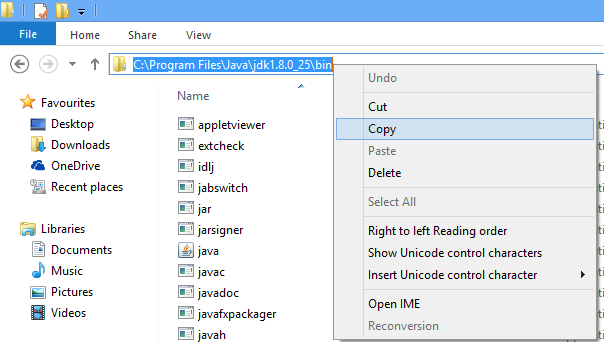
Step 1: Check the JDK installation directory and copy the
\binpath.
Example:C:\Program Files\jdk-21\bin
-
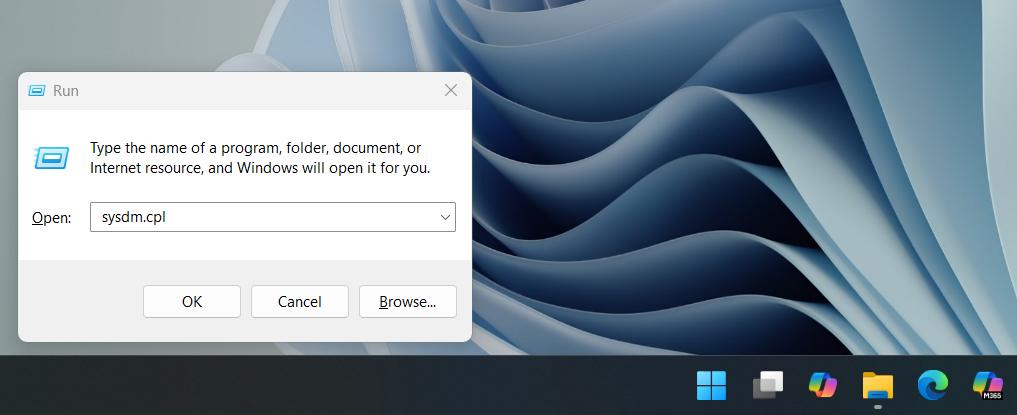
Step 2: Open System Properties.
Press Windows + R, typesysdm.cpl, and press Enter.
-
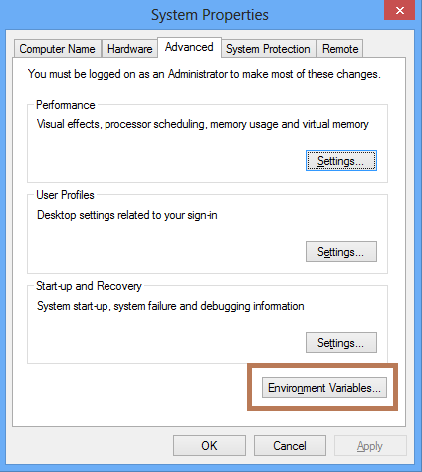
Step 3: Click the Advanced tab and then click
Environment Variables....
-
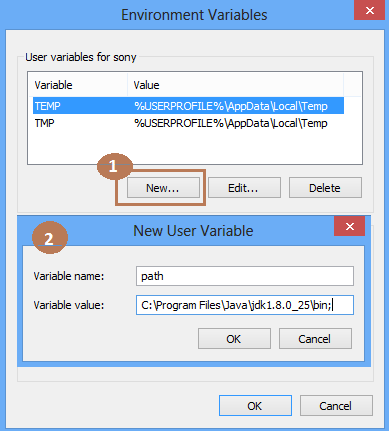
Step 4: In the User Variables section, edit the Path variable
and add the JDK
binpath.
Note: Do not delete existing values. Only add the JDK path as a new entry.
-
Step 5: Verify the Java path setup.
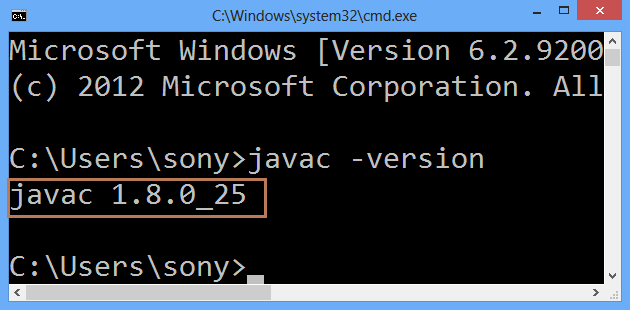
Open Command Prompt and run:Windows Commandjavac -version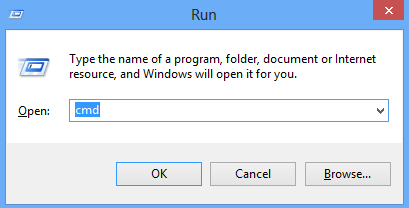
If the setup is correct, it will display the installed Java compiler version.
How to Set Java PATH on Linux / Solaris
To check if Java is installed, run:
java -versionIf it shows command not found or an older version, you need to install Java or update the PATH.
C shell (csh):
set path=(/usr/local/jdk/bin $path)Bash shell:
PATH=/usr/local/jdk/bin:$PATH
export PATH
sh shell:
PATH=/usr/local/jdk/bin:$PATH
export PATH
After updating PATH, reload your shell configuration file and verify with:
java -versionHow to Set Java PATH on macOS
On macOS, you can use the java_home tool to detect installed Java versions.
/usr/libexec/java_home -VTo check the Java compiler version, run:
javac -version- Install JDK before writing and running Java programs.
- Set the PATH variable so Java commands work from the command line.
- Use
java -versionandjavac -versionto verify your setup. - The setup steps are slightly different for Windows, Linux, and macOS.
Interview Questions ⭐
Next step: Learn the Java Program Structure.
🧠 Test your understanding with a quick quiz
🚀 Quick Knowledge Check
Topic: Java_environment_setup | Language: Java
Q1. What does JDK stand for in Java?
Q2. On macOS, which tool helps manage multiple Java versions?
Q3. On Linux (bash shell), how do you add JDK to the PATH?
Q4. Which component of Java includes both the compiler and runtime environment?
Q5. Which command is used to verify Java compiler installation in Windows?
Q6. Why do we set the PATH environment variable in Java installation?
Q7. What is the default JDK installation directory in Windows?
🎉 Great job! Continue learning Java step by step.
Have you completed this lesson?
Mark this lesson as completed to track your learning progress. To keep track across devices, please login and save your learning progress.

Discussion
Ask questions, share suggestions, or discuss this lesson.